Friday, August 14, 2015

Wheelchair Richard III : played disabled amateur actor

Madigan on Richard III: A role that explores the idea that ‘this disability may be why I’m killing people’


theater richard III MG_081315

In 2012, archaeologists announced that they had found the skeletal remains of King Richard III under a parking lot in Leicester, England, and that this legendarily “humped” figure likely suffered from scoliosis. The discovery moved some to consider the role of disability in the character of the monarch, who was so memorably immortalized by Shakespeare as a brutal opportunist.

Now, the role is being taken on here in Portland, and the implications of the character’s misshapen body explored, by a man with a disability of his own: Stephen Madigan, a paraplegic, will portray Richard III in a wheelchair, in a production directed by Sally Wood, produced by Madigan himself, and presented at the Portland Stage Company Studio Theater with an array of superb local actors in supporting roles.

Portland native Madigan, a radiologist in middle age who has used a wheelchair since his early twenties, is the first to admit that he is not a career actor: His only previous acting role was in fifth grade.

“I had five lines,” he said jovially, before a rehearsal last week, “and I screwed them up.” But he came from a theatrical family immersed in Shakespeare, classical music and theology, and as an adult he was drawn to Richard’s famed soliloquy. After studying and memorizing it, he says, he was encouraged by local actor Joe Quinn to attempt the role himself.

Madigan found his interest deepened when the real-life king’s bones were discovered, and he commenced to read everything he could find about Shakespeare and the everyday life of the period. He also began what would become his seven-month search for a director.

With encouragement from Andrew Harris, Artistic and Executive Director of Deertrees Theatre and Production Manager of Portland Stage Company, in the fall of 2013 Madigan met well-established Portland actor and director Sally Wood, and from then until just a few months ago, he has been rehearsing the part with Arthur Hill, a theater professor at the University of Maine at Machias.

Spurred by his reading, Madigan pondered what it might have meant for a monarch to have such a disability in an age when being “crippled” was often considered the fate of commoners or “sinners.”

And the concept of being “disabled” itself proved a mental adjustment for him.

“I’ve been in a wheelchair for a long time,” says Madigan, “but I don’t think of myself as disabled.”

What he sees in Richard III is “a fascinating play about a person’s psyche” – about a character, he notes, who obsesses about his disability in his opening lines, and who is clearly devastated by his own mother’s disgust for him.

“I have to convince myself that this is who I am,” says Madigan, “that this disability may be why I’m killing people, at least partially.”

Madigan and Wood have attracted some stellar local theater talents to the cast, including some we haven’t had the pleasure of seeing onstage for months or more, like Corey Gagne, who gives a harrowing monologue as Tyrrell (ordered by Richard to kill the king’s little nephews), and Lisa Muller-Jones, as his Richard’s bereaved sister-in-law.

 The cast also features the fine Mark Rubin, Molly Roberts, Max Waszak, Robbie Harrison, and Carmen-Maria Mandley (who delivers a bracingly funny-scary monologue as Margaret). Physical movement in the show is taut and, in the case of an execution, even jaw-dropping.

And that the lead is in a wheelchair – his head several feet below those of the people he addresses – contributes a compelling power dynamic, an extra edge to his aggression. Wheeling up to people, so smoothly and silently, Madigan’s Richard has a disarming stealth, and his thoughtful delivery reflects the immense time devoted to considering and feeling through the king’s physical and psychological dimensions.

Acknowledging his newness to the stage, Madigan hopes that he’ll inspire other non-professionals to give a new art a try. He likes the idea that “people with low self-esteem, or disabilities, or whatever, could come to this play, and say, “Wow, that guy in a wheelchair is playing Richard III. Maybe I could, too.”

Richard III, by William Shakespeare. Directed by Sally Wood. Produced by Stephen Madigan at the Portland Stage Studio Theater, Aug. 12-15. Call 207.847.8020 or visit  richardthethirdmaine.com.

Sunday, May 31, 2015

Ten Reasons Why Shakespeare Was Catholic

shakespeare

There are probably no greater academic debating topics than the mysterious life of the Bard of Avon–William Shakespeare.

Did he really write those plays? If he didn’t, who did? Was he involved in the Elizabethan spy network?

Was he a secret Catholic? Are there pro-Catholic “codes” is his plays?

I’m off to England in a few weeks’ time with my friend Joseph Pearce to help conduct a pilgrimage that focuses on English Catholic literary figures and Catholic martyrs.

“Shakespeare the Catholic” will be one of the key discussion topics. So here are ten reasons why Shakespeare was very probably a Catholic.

1. There were plenty of secret Catholics in Elizabethan England - Elizabeth I’s England was a virtual Protestant police state. Everyone had to swear loyalty to the Protestant queen. Everyone had to go to the state church. Attendance was taken. If you didn’t attend you were fined, imprisoned and fined again. The Catholic Church went underground and a secret network developed of faithful Catholic families.

2 Shakespeare’s family were secret Catholics - the secret Catholics were called “recusants” which means “refusers” because they refused to conform to the state religion. Shakespeare’s mother was from the Arden family–a well known and influential recusant family in Warwickshire.  One of the Arden relatives was executed for hiding a priest and John Shakespeare–William’s father–was fined for refusing to attend Church of England services. Shakespeare’s daughter Susanna was recorded as being Catholic.

3. A Catholic pamphlet was found hidden in the rafters of Shakespeare’s Birthplace - The pamphlet was a translation of a tract by St Edmund Campion who was executed in 1581 for being a Catholic priest. The young William Shakespeare was living in the house where the pamphlet was found at the time it was hidden.

4. Shakespeare probably had a Catholic wedding - Shakespeare married Anne Hatawat in 1582. They didn’t marry in their local church but scooted off to be married by Fr. John Frith at his little church in the nearby village of Temple Grafton. Four years later, the government accused Frith of secretly being a Roman Catholic priest. Did William and Ann go there in order to be married in a Catholic ceremony?

5. Shakespeare wrote sympathetically about Catholics - Shakespeare  included sympathetic Catholic characters in his plays: Friar Laurence from Romeo and Juliet and Friar Francis in Much Ado About Nothing. Shakespeare’s writing also indicates an intimate knowledge of Catholic ritual and belief.

6. Shakespeare condemns the Tudor regime - Hamlet is a play about social disintegration, incest, madness, infertility and murder. These were all things of which the Catholics accused the Tudor regime of Henry VIII and Elizabeth.

7 Shakespeare links social upheaval and chaos with Protestantism - Hamlet and his friend Horatio are “students at Wittenburg”–which was the center of Protestantism and Denmark is portrayed as a newly Protestant regime. The link is clear that it is the Protestant revolution that has brought the curse of murder, fratricide, incest, madness and chaos on the country.

8. Shakespeare may have visited the English College in Rome - In 2009 archivists at the Venerable English College in Rome uncovered two mysterious entries that could have been William Shakespeare using an alias. Because of the secretive and dangerous times, English Catholics abroad often traveled under assumed names. The dates match the time when Shakespeare’s whereabouts were unknown.
9. After his retirement Shakespeare bought a property in London as a priest’s “safe house” - Shakespeare bought the Blackfriar’s Gatehouse at a huge price. One assumes to keep it as a safe house for Catholic priests and for secret masses.
10. Shakespeare was reported to have died as a Catholic – He left almost everything in his will to his Catholic daughter Susanna. He left nothing to his Protestant family members and in the late 1600s, an Anglican minister wrote that Shakespeare “dyed a Papyst” – or a loyal Catholic

Shakespeare's English Is NOT That Complicated


318


2


5


2K


Professor David Crystal and his son Ben at Hay Festival 2015  
 
Photo: Jay Williams
Studying Shakespeare for exams is made far more confusing than it ought to be for a generation which has unwittingly adopted the Bard's own language devices, one of the world's leading experts on linguistics has suggested. 

Professor David Crystal said only a tiny selection of the million words making up the canon of William Shakespeare were markedly different to the language of 2015, making it much easier to understand than many people think. 

Young people today, he said, had even adopted some of Shakespeare's own linguistic traits without realising, with the Facebook generation creating the word "unfriend" just as the playwright used "unsex, unsound or uncurse".


Prof Crystal, who has written a Shakespeare dictionary with his actor son Ben, added the huge number of notes accompanying plays on the exam syllabus gave the impression that the text was far more complicated than is necessary.

Speaking at Hay Festival, Ben Crystal added even he had disliked Shakespeare at school, pointing out the curriculum requirement to "study" it rather than learn to enjoy it gave children the wrong impression.

"You open one of the typical editions of Shakespeare at Act 1, Scene 1, Page 1, and there are just two lines of text and all of the rest of the page is notes," said Prof Crystal, who has written and edited more than 100 books on language.


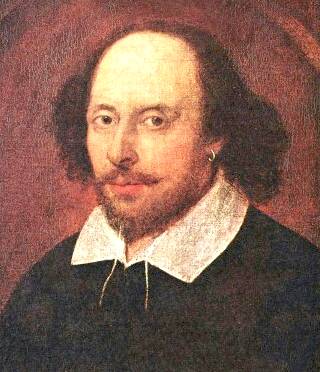
 A likeness of William Shakespeare (Alamy)
 
"If you're looking at that, Shakespeare must be difficult then mustn't he? Otherwise what are all these notes doing?

"And so when you're looking at Shakespeare on the page, certainly you get the impression that Shakespeare is different. Almost a different language from the present day.

"But in actual fact it isn't as different as all that. It's early modern English, not late Middle English.

"When you actually go through all the words in Shakespeare - and there are nearly a million words in Shakespeare - there are only just around 20,000 different words altogether.

"And when you go through all of those and compare them with the modern day, for words in Shakespeare that are different in meaning from the words you and I speak today, the answer is surprisingly small.

"Only five per cent are really, really different."


Professor David Crystal, speaking at Hay Festival (Jay Williams)

Of those, he said, around 1,000 are "false friends" such as the word naughty, which appear to be familiar but have a slightly different meaning.

He told an audience Shakespeare was particularly fond of using the prefix "un", such as "unshout", "uncurse" and Lady Macbeth requesting: "Unsex me".

"Leave it like that and it's a different language" said Prof Crystal. "But point out that 'friend' has now become 'unfriend' and the kids go 'oh yeah, that's right'.

He added he had recently heard other examples in modern life, including "unChinese-y", "unpoliceman-life" and "unyoung".

Ben, who has performed 'original pronunciation' versions of Shakespeare to show how the first audiences understood it, said students should be taught to love the plays, then introduced to the linguistic tools to get the most out of them.


Ben Crystal (Jay Williams)
 
"I didn't like Shakespeare when I was in school and it didn't make sense to me until I started acting it," he said.

"I don't like the idea that the curriculum says that our younglings must have studied two Shakespeare plays by the age of 14.

"Shakespeare started not as a man of literature but as a man of the stage: he was a playwright rather than a novelist or author.

"Where in the curriculum or our school studies are we giving them a chance to play with Shakespeare? Or learn to love Shakespeare?"

The Oxford Illustrated Shakespeare Dictionary is out now.

Tuesday, May 5, 2015

Rich Folks Seats at the Restored Globe in London.

Globe, London


Shakespeare: ten amazing places to watch his plays in 2014

Clarification of Yet More of Shakespeare Risque Humor

Bawdy Bard: Shakespeare Play's Lost Lines Reveal Sexual Mocking


section from a Shakespeare comedy
In the Shakespeare play Don Armado, a bragging Spanish nobleman who is hopelessly in love, tells his page, a boy named Moth, to "Warble, child; make passionate my sense of hearing." Moth's reply is one word "Concolinel," which makes no sense.
Credit: Bodleian First Folio, CC Attrib 3.0 unported
A lost section of "Love's Labour's Lost," a comedy written by William Shakespeare, has been rediscovered, revealing a song mocking the sexual inadequacy of one of the play's male characters.

The rediscovery of this section did not come from a long-lost manuscript, but rather through the analysis of a mysterious one-word line in the play that has long mystified scholars.

Lovesick Nobleman
 

Written in the 1590s, the play was performed before Queen Elizabeth I. In the play, a man named Ferdinand, the King of Navarre (in northern Spain), establishes a law banning men in his court from having sex, or even meeting with a woman, for three years while he and his retainers undertake scholarly studies. Ferdinand believes the studies will be more successful if the people around him abstain from sex.

Not long after the law is in place, Costard, one of Ferdinand's subjects, gets caught with a woman named Jaquenetta. Spanish nobleman Don Adriano de Armado — who has a high opinion of himself and his sexual abilities — imprisons Costard. Armado himself falls hopelessly in love with Jaquenetta, freeing Costard on condition that he set Armado up with Jaquenetta. [The 6 Most Tragic Love Stories in History]

At the beginning of Act III, the lovesick Armado asks his servant, a page named Moth, to "Warble, child; make passionate my sense of hearing."

This is where the mystery begins. When Shakespeare's play was published, the only line that follows is Moth saying the word "Concolinel."

What Shakespeare meant by "Concolinel" has been a long-standing mystery. The word "song" is written at the start of the third act suggesting Moth is supposed to sing a song related to "Concolinel."
"Moth's solitary word has generally been taken as representing a song, now lost, for which the lyrics are not given in the play," wrote Ross Duffin, a professor at Case Western Reserve University in Cleveland, in an article recently published in the journal Shakespeare Quarterly.
a song in a shakespeare play
Now, after 400 years, a researcher has found that "Concolinel" is a corrupted version of the French song "Qvand Colinet." Shown, part of the song when it was reprinted in 1887.
Credit: public domain, digitized by Google
Duffin found that "Concolinel" is actually a misspelling of a French song called Qvand Colinet, which was popular around the time Shakespeare lived. The song refers to a penis that is "too soft and too small," and would have been sung by Moth to mock Armado's sexual inadequacy. Armado, who doesn'tunderstand the song, doesn't realize that his own servant is making fun of him.

"Don Armado was being mocked by the use of this song. He thinks of himself as being so gallant," Duffin told Live Science in an interview. "Don Armado doesn't realize that he's being pilloried, and so that would have been the joke."

The entire song may not have been sung when the play was performed.

Rediscovery

Duffin, a music professor, has written extensively about the songs from Shakespeare's plays, publishing a book about his research in 2004 called "Shakespeare's Songbook."

In his plays, Shakespeare refers to many popular songs in his time, Duffin told Live Science. Some of these songs were so popular their lyrics didn't have to be published.

Part of the problem with the song in "Love's Labour's Lost" is that Shakespeare gave only its name, and those charged with publishing Shakespeare's plays appear to have mangled its French spelling.
Duffin's research revealed several lines of evidence that indicate that this is Shakespeare's lost song. Aside from the similarities in spelling, the song fits in well with the dialogue. Moth is a young servant who regularly finds ways to make fun of his inept master Armado, and this song plays into this tone.

Also, after Moth sings this song, and Armado asks him to perform a task, Moth asks Armado whether he will win over Jaquenetta with a "French Braule" (braule being a type of song), indicating the song was French.

Additionally, the song lyrics also appear to include the word Jaquenetta. "Without much of a stretch, the repeated line 'Et sa belle iaquette' could be construed as 'And his pretty Jaquenetta,'" wrote Duffin in the article.

Duffin's research indicates this song was popular in Shakespeare's time, and English performers were making their way back and forth from England to the European continent bringing songs back with them.

This song "seems to have been something that was popular probably in the late 16th and in the early 17th century," Duffin said. It was first published as part of an anthology of popular songs in 1602 but would have been known before then.

Duffin found that the song may have been sung to the tune of Sellenger's Round (examplesof this tune can be heard on YouTube), but this is uncertain.

Reaction to the discovery

Chantal Schütz, a professor at the Université Sorbonne Nouvelle in Paris, who has published articles on this play, believes the song is likely correct.

"I find the arguments very convincing as concerns the text of the song, and there is ample evidence that songs traveled back and forth between France and England just like other commodities, material or immaterial," she wrote in an email, adding that it may not have been sung to the tune of Sellenger's Round (music for a dance).

It's possible that the newly rediscovered section of the play could be performed as early as this summer at the Stratford Shakespeare Festival in Stratford, Ontario, although this has yet to be confirmed.

Follow Live Science @livescience, Facebook & Google+. Original article on Live Science.

Tuesday, April 28, 2015

Homeschooling Mom: Why Shakespeare is Great

                   What's So Great About Shakespeare?


"His grasp of the human condition is perhaps unmatched in literature."

Terry W. Glaspey


As a young mother, I wasn't convinced that Shakespeare was worth studying-at least, not by children. After all, his plays had bawdy jokes, frequent love-making and his personal life had some serious flaws. However, over time, as I studied Shakespeare's plays and researched his influence upon the English-speaking world, I began to feel that my children would have quite a gap in their understanding of our world if I neglected Shakespeare. I would have to be careful how I approached it, guarding their little hearts while introducing them to yet another medium that revealed the nature of mankind. Here are...

Some reasons why we study Shakespeare
He is responsible for adding some 2000 words and phrases to the English language-examples include: gloomy, lonely, majestic, reliance, hurry, leapfrog, excellent. Tongue-tied, budge an inch, seen better days, fair play, lord and master, foul play, dead as a doornail, my own flesh and blood, set your teeth on edge, without rhyme or reason, laughing stock, didn't sleep a wink and if the truth were known. (more here)

His plays provide a comprehensive and thoughtful look at the human condition, dealing with the virtues of men as well as their vices- love, faithfulness, greed, honesty, selfishness, mercy, lust, power and justice are just a few. As we study his plays we understand ourselves better.

His inspiration comes from historical events, mythological tales, and Biblical passages. He often refers to Christ, his teachings and other Biblical characters and morals. All of these sources are a vital part of our history.

His plays deal with the consequences of sin and yet Shakespeare is very liberal in showing mercy. I believe this is a VERY important theme in his works. Macbeth, although one of his darkest plays, reveals the power of unconfessed sin and it's ability to destroy not just one, but many lives. It also exposes the dangers of witchcraft.

His plays provide rich fodder for meaningful discussions.

His poetry is profound. Shakespeare and the sonnet go hand in hand.

His plays have intricate plots with many twists and turns, providing an excellent exercise in logic.

They are thoroughly entertaining and stimulate the imagination.


Merchant of Venice The Tempest King Lear
(Click to enlarge)

Caveats
Shakespeare does misbehave at times, but fortunately, the Elizabethan English veils such innuendos quite well and they go by unnoticed by the children. For this reason, it is better if you do not use modern versions of the plays.

I have been told that not all of his plays are suitable for young people so you will have to be careful and do a little research. If you look at AO's suggestions, you should be safe.

The words 'lovers' and 'love-making' are frequently used but this did not have the same meaning back then as it does today. It referred to the attraction and not the act between two people. I do not let my children read books about boys and girls 'in love' with each other. Shakespeare, however, does not fall in this category because the characters are adults and the stories are often unrealistic and very silly. They cause my children to scoff at the nonsense rather than produce an attraction for the opposite sex.

Shakespeare's plays were obviously not written for young children. However, we all know that most high school-aged students today do not enjoy studying Shakespeare. I believe this is partly due to the difficult language. Teachers immediately expect understanding, enjoyment and analysis to occur in a single lesson. The student did not have enough time to develop an appreciation for the stories. I feel it is a good idea to introduce children to the general stories using expurgated versions adapted especially for the child mind. In this way, the children will have developed an understanding of the stories and an appreciation for them by the time they are old enough to explore the important themes within them in greater detail. If you read early classic children's literature, you will notice that children were introduced to Shakespeare while young using Nesbit's and Lamb's stories. It was common to name a pet after Greek or Shakespearean heroes. Elizabeth Enright's books are a good example of this. Educators and parents evidently recognized the value of introducing the Bard to children. They followed these preparatory steps not only with Shakespeare, but other classic authors as well.


Taming of the Shrew


In our Home
When my children reach 7 or 8 yrs of age, I read aloud  Nesbit's  Beautiful Stories from Shakespeare once a week, taking two weeks per tale. I divide a dry erase board into about 9 large grid squares and draw stick figures of each main character as they are introduced. I write the name of the play in the first box. My children do the same on their clipboards by dividing a piece of paper into squares and copying me. I write the name of each character above each stick figure. My young writers only write the first letter of each person's name in each of their boxes.

Often, for a creative narration, the children retell the story (just part of it) using paper dolls or popsicle sticks with the figures puttied onto them. Here is another idea.

We also read Shakespeare, Bard of Avon together. This is a wonderful, simple, yet thorough introduction to his life and works.

As we continue the book in third grade, they make a drawn narration of the tale and label it. We watch Shakespeare's Animated Tales too, but only AFTER we have finished the story.

We usually act out a Shakespeare play once a year as well and invite our close friends and family to watch the production. Our family has made some beautiful memories this way.

Approximately ten or eleven years of age, my children watch the play online. With their own personal copies of the play in book form open in front them, they follow along. I try to make sure that at least two children are doing this together to make it more fun. My daughters love to watch these plays (if link doesn't work try here) and laugh over the numerous jokes housed in archaic language. This takes twelve weeks to finish as I only allow about 15 minutes per week for this. We don't analyze, just enjoy and of course, spontaneous natural discussions occur too. They usually narrate to me afterwards.

By high school, my children are thoroughly acquainted with several Shakespearean plays and enjoy reading and talking about them. They are now ready for the next step, which involves analysis. Each student on her own reads and studies the plays in Brightest Heaven of Invention and then watches some of the movies that the author recommends. This is done slowly over several years.

Notice that I am not the main teacher for most of this. After careful research and listening to the advice of people I respect, I find sources I feel that I can trust and am allowing them to do the bulk of the teaching. I simply provide the resources and gently guide occasional discussions. My children are mostly self taught.


Hamlet.................. Cymbeline .................. As You Like It ............... Richard III

Recommended Resources
http://www.berith.org/hsres/shak/shak01.html Why study Shakespeare?
http://cla.calpoly.edu/~smarx/courses/510F99/510Cal.html A Biblical online Shakespeare Course
http://absoluteshakespeare.com/index.htm Absolute Shakespeare- Summaries, quotes, biography, plays and more.
http://www.sparknotes.com/shakespeare/ Spark notes- good summaries
http://www2.hn.psu.edu/faculty/jmanis/shake.htm Complete plays, free
http://karenswhimsy.com/shakespearesplays.shtm Colorful Illustrations

"Shakespeare was as great a philosopher as he was a poet. That's what he set out to teach us in every line. His characters 'Leontes,' 'Othello,' 'Lear,' 'Prospero,' 'Brutus,' demonstrate the same thing: that a man's reason will try to bring infallible proofs to any notion that a person decides to take up. There's no shortcut and no way around it, the art of life takes a long time to learn."
Charlotte Mason


*article edited Feb 2010

22 comments:

  1. Oh what wonderful insight, encouragement and resources you have provided here! This is something I've been struggling with, espeically with my oldest, who, as you may remember, didn't come home to be self taught until 5th grade. She is definitely getting a late start.

    Kim
    Reply
  2. Thanks,Kim.

    There are still errors in this post and the formatting is off but I need to spend some time with my kids. I'll try to make repairs later today.
    Reply
  3. Betty4.5.07
    Wow! Linda! What a valuable post! THis is the most useful information I have seen on Shakespeare! This is just what I needed to jumpstart our study!

    I ordered this Shakespear collection a few months ago and I'm now ready to start. http://www.homeschoolradioshows.com/ Scroll down to September 21 entry. I emailed them to see if they are still offering this incredible resource, so I'll let you know.

    Thank you so much! We are grieved and praying for the spiritual events of Turkey recently.

    Sending warmest wishes across the seas (it's already hot and humid here),
    Betty
    Reply
  4. Anonymous4.5.07
    Wow, what a wonderful post. Thank you so much for the direction and insight. I have been wondering how to study Shakespeare at an 8 year olds level. I am hoping, that since I have always been intimidated by Shakespeare that I can learn to enjoy it right along with him.

    Shari
    Reply
  5. Hi Linda,
    Thank you for the detailed post! I am so happy! Since we are getting ready for Year one this is perfect timing.
    Have a great day,
    Stacy
    Reply
  6. Dawne4.5.07
    Dear Linda,

    Your blog is such an encouragement to me! What a great mentor I have found in you. =o)

    We are starting Year 1 this fall, and the legwork you've done and posted on your blog, such as this one regarding Shakespeare and children, will be of such use to many.

    thank you!
    Reply
  7. Thank you so much for this post. I wanted to start Shakespeare with my 1st grader, but I wasn't sure where to begin. You've laid out some great ideas here! I especially love the white board with the grid and the characters! Wonderful idea!

    Thank you so much for your insight; it is always so helpful,

    Blessings to you and your family,

    Sherry
    Reply
  8. What perfect timing--we're just coming up on Shakespeare's time in our history studies (VP). Thanks so much. I know this was a lot of work, as I just did a Musical Time Periods post for the Carnival of HS earlier this week. Whew!
    Reply
  9. Thank you for such a helpful post. We are just nearing the end of year 1 and your site has been a great blessing to me.

    Our library does not have Edith Nesbit's book, but it does have Lamb's, Tales from Shakespeare. I was just wondering about the difference between these two and why you prefer Nesbit for the early years and Lamb later?

    Thanks,

    Rachel
    Reply
  10. So glad you found some ideas, ladies. Thanks for the feedback.

    Rachel, Nesbit's version is a little simpler and thus shorter. The differences aren't great. You could easily use Lamb's as a substitute. Some folks actually prefer Lamb's because the details help to clarify some things that are not explained in Nesbit's.
    Reply
  11. Wow! Thanks!! I have been a long time lover of Shakespeare, I had an awsome Drama teacher in high school who taught us to understand, and it also deepened my understanding and love of the scriptures. I thought I had to wait until my little ones were older, how exciting knowing I can start now!! Thank you!
    Reply
  12. Hi Linda,
    Hope you are well. I just wanted to say thanks for including the pdf music and artist flash cards in your delicious finds - they are great.
    Have a great week.
    Stacy
    Reply
  13. Danna,
    Please share on your blog sometime some spiritual insights your gained from Shakespeare. I think that would be so helpful for many.

    Thanks for taking the time out of your busy schedules to comment, ladies.

    Stacy,
    I have the hardest time opening your blog and commenting. There are always too many connections. I'll try again later. Glad the links were helpful. I only pass along links that I really like.
    Reply
  14. Linda,

    Thank you, once again, for an excellent & insightful post. I glean so much from your thought-provoking articles. Learning has once again become a joy for me, as I guide my own in a rich education.

    Blessings,
    K.
    Reply
  15. We like Shakespeare!
    I had NEVER read any of his works before homeschooling.
    We read Bard of Avon also.
    I liked the last two pages, where it tells of all the popular quotes that we get from Shakespeare.
    I also like the books by Bruce Coville.
    Reply
  16. Mme Labonté11.5.07
    Linda,
    Thank you so much for your recommendations. I've been wondering what to do with Shakespeare. I'm always so encouraged after reading your blog. Thank you for sharing what you're learning!

    Mme Labonté
    Reply
  17. I think it's great that you are encouraging Shakespeare! I love him. Just this week I recieved an email from one of the homeschool yahoo groups I belong to. They were calling for homeschoolers to get together and perform this summer. As I kept reading I was surprised (but not too surprised) to see that they had edited the play to reflect a Christian bias! Edit Shakespeare?! Say it isn't so! There were a flood of emails from mothers who were thankfully appalled!
    Reply
  18. Traci,
    I laughed when you said you were surprised, but not too surprised. I understand that statement. ;)
    Reply
  19. Thanks for the very refreshing site. May I have permission to use your Shakespeare thoughts in my small homeschool co-op play? I will be needing to make 10 copies.
    Reply
  20. Yes, Pam, you may use the article. I do ask that each copy have my name and a link to my website.
    Reply
  21. Anonymous30.6.10
    Thank you for the explanation, I am a college student and never felt like I understood why Shakespeare was that amazing! Well now I have a start, this post makes me want to read more of his works thanks.
    Reply
  22. Anonymous1.3.12
    Commenting 5 years after the original comment should not make my input less relevant.

    I think any Shakespeare play should be readily available to any person out there. Even a bloody play like Titus Andronicus (often deraded for its simplistic plot) contains a wealth of information and insight valuable to any humanbeing (whether he/she be a child or an adult).

    The best play to get to know Shakespeare with is probably Macbeth, though any play (as you so rightly phrased) provides an excellent exercise in logic.
    Reply