
Ten Reasons Why Shakespeare Was Catholic
May 20, 2015 by
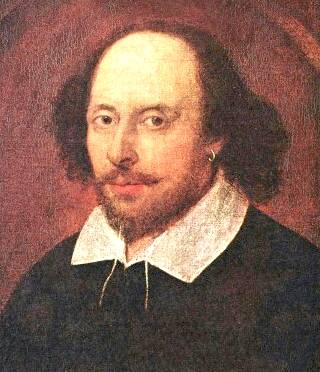
There are probably no greater academic debating topics than the mysterious life of the Bard of Avon–William Shakespeare.
Did he really write those plays? If he didn’t, who did? Was he involved in the Elizabethan spy network?
Was he a secret Catholic? Are there pro-Catholic “codes” is his plays?
I’m off to England in a few weeks’ time with my friend Joseph Pearce to help conduct a pilgrimage that focuses on English Catholic literary figures and Catholic martyrs.
“Shakespeare the Catholic” will be one of the key discussion topics. So here are ten reasons why Shakespeare was very probably a Catholic.
1. There were plenty of secret Catholics in Elizabethan England - Elizabeth I’s England was a virtual Protestant police state. Everyone had to swear loyalty to the Protestant queen. Everyone had to go to the state church. Attendance was taken. If you didn’t attend you were fined, imprisoned and fined again. The Catholic Church went underground and a secret network developed of faithful Catholic families.
2 Shakespeare’s family were secret Catholics - the secret Catholics were called “recusants” which means “refusers” because they refused to conform to the state religion. Shakespeare’s mother was from the Arden family–a well known and influential recusant family in Warwickshire. One of the Arden relatives was executed for hiding a priest and John Shakespeare–William’s father–was fined for refusing to attend Church of England services. Shakespeare’s daughter Susanna was recorded as being Catholic.
3. A Catholic pamphlet was found hidden in the rafters of Shakespeare’s Birthplace - The pamphlet was a translation of a tract by St Edmund Campion who was executed in 1581 for being a Catholic priest. The young William Shakespeare was living in the house where the pamphlet was found at the time it was hidden.
4. Shakespeare probably had a Catholic wedding - Shakespeare married Anne Hatawat in 1582. They didn’t marry in their local church but scooted off to be married by Fr. John Frith at his little church in the nearby village of Temple Grafton. Four years later, the government accused Frith of secretly being a Roman Catholic priest. Did William and Ann go there in order to be married in a Catholic ceremony?
5. Shakespeare wrote sympathetically about Catholics - Shakespeare included sympathetic Catholic characters in his plays: Friar Laurence from Romeo and Juliet and Friar Francis in Much Ado About Nothing. Shakespeare’s writing also indicates an intimate knowledge of Catholic ritual and belief.
6. Shakespeare condemns the Tudor regime - Hamlet is a play about social disintegration, incest, madness, infertility and murder. These were all things of which the Catholics accused the Tudor regime of Henry VIII and Elizabeth.
7 Shakespeare links social upheaval and chaos with Protestantism - Hamlet and his friend Horatio are “students at Wittenburg”–which was the center of Protestantism and Denmark is portrayed as a newly Protestant regime. The link is clear that it is the Protestant revolution that has brought the curse of murder, fratricide, incest, madness and chaos on the country.
8. Shakespeare may have visited the English College in Rome - In 2009 archivists at the Venerable English College in Rome uncovered two mysterious entries that could have been William Shakespeare using an alias. Because of the secretive and dangerous times, English Catholics abroad often traveled under assumed names. The dates match the time when Shakespeare’s whereabouts were unknown.
9. After his retirement Shakespeare bought a property in London as a priest’s “safe house” - Shakespeare bought the Blackfriar’s Gatehouse at a huge price. One assumes to keep it as a safe house for Catholic priests and for secret masses.
10. Shakespeare was reported to have died as a Catholic – He left almost everything in his will to his Catholic daughter Susanna. He left nothing to his Protestant family members and in the late 1600s, an Anglican minister wrote that Shakespeare “dyed a Papyst” – or a loyal Catholic


Kim
There are still errors in this post and the formatting is off but I need to spend some time with my kids. I'll try to make repairs later today.
I ordered this Shakespear collection a few months ago and I'm now ready to start. http://www.homeschoolradioshows.com/ Scroll down to September 21 entry. I emailed them to see if they are still offering this incredible resource, so I'll let you know.
Thank you so much! We are grieved and praying for the spiritual events of Turkey recently.
Sending warmest wishes across the seas (it's already hot and humid here),
Betty
Shari
Thank you for the detailed post! I am so happy! Since we are getting ready for Year one this is perfect timing.
Have a great day,
Stacy
Your blog is such an encouragement to me! What a great mentor I have found in you. =o)
We are starting Year 1 this fall, and the legwork you've done and posted on your blog, such as this one regarding Shakespeare and children, will be of such use to many.
thank you!
Thank you so much for your insight; it is always so helpful,
Blessings to you and your family,
Sherry
Our library does not have Edith Nesbit's book, but it does have Lamb's, Tales from Shakespeare. I was just wondering about the difference between these two and why you prefer Nesbit for the early years and Lamb later?
Thanks,
Rachel
Rachel, Nesbit's version is a little simpler and thus shorter. The differences aren't great. You could easily use Lamb's as a substitute. Some folks actually prefer Lamb's because the details help to clarify some things that are not explained in Nesbit's.
Hope you are well. I just wanted to say thanks for including the pdf music and artist flash cards in your delicious finds - they are great.
Have a great week.
Stacy
Please share on your blog sometime some spiritual insights your gained from Shakespeare. I think that would be so helpful for many.
Thanks for taking the time out of your busy schedules to comment, ladies.
Stacy,
I have the hardest time opening your blog and commenting. There are always too many connections. I'll try again later. Glad the links were helpful. I only pass along links that I really like.
Thank you, once again, for an excellent & insightful post. I glean so much from your thought-provoking articles. Learning has once again become a joy for me, as I guide my own in a rich education.
Blessings,
K.
I had NEVER read any of his works before homeschooling.
We read Bard of Avon also.
I liked the last two pages, where it tells of all the popular quotes that we get from Shakespeare.
I also like the books by Bruce Coville.
Thank you so much for your recommendations. I've been wondering what to do with Shakespeare. I'm always so encouraged after reading your blog. Thank you for sharing what you're learning!
Mme Labonté
I laughed when you said you were surprised, but not too surprised. I understand that statement. ;)
I think any Shakespeare play should be readily available to any person out there. Even a bloody play like Titus Andronicus (often deraded for its simplistic plot) contains a wealth of information and insight valuable to any humanbeing (whether he/she be a child or an adult).
The best play to get to know Shakespeare with is probably Macbeth, though any play (as you so rightly phrased) provides an excellent exercise in logic.