To borrow from
Hamlet‘s Polonius, there is something of a method to the madness in Whedon shooting a “homebrew” adaptation of Shakespeare’s play,
Much Ado About Nothing, during a break on the $220 million franchise mega-hit,
The Avengers
(Nicholson). Whedon’s idea and execution of a “homecoming party”
(Whedon) is wonderfully explored elsewhere in this collection. This
essay, on the other hand, shall adopt a posture comparable to that of
Much Ado‘s Dogberry, or preferably,
Buffy‘s Scooby Gang, in attempting to seek out clues and then speculate on any future Whedon adaptations of Shakespeare.
Through all his types of media, Whedon has consistently pushed
himself to be innovative, even when adapting 400 year old plays; so
trying to pin-down which project Whedon may make next, and what form it
will take, depends on a variety of factors that this essay will explore.
Unlike Whedon’s Ord of the Breakworld from
Astonishing X-Men, we
do not possess time-predicting technology, so there is a speculative
sort of “madness” in this chapter, but in equal measure, there is also
hopefully something of a method in exploring new endeavours, encouraged
by the following quote from Whedon: “I’d love to do more Shakespeare but
on the other hand I’d love to do something that I’ve never done before
[so] it would have to be a really new enterprise every time”
(Carnevale).
The Tragedies of Hamlet and Macbeth
As a useful point of orientation, in the accompanying script book for
Much Ado, Whedon is asked which play he might consider shooting next, to which he replies: “
Twelfth Night and
Hamlet are the two favourites of mine” (Whedon and Shakespeare 32).
Twelfth Night shall be addressed shortly; for now it is interesting to note that whilst Whedon may love
Hamlet, by his own admission it is also the play that he finds most difficult to consider adapting.
Much Ado
was shot in only 12 days at Whedon’s house, with the purpose of sharing
one of the traditional Shakespearean readings that he regularly holds
at home with his talented-actor friends. To shoot
Hamlet in the same way would be practically impossible. As Whedon explains:
Hamlet is something where I’d have to stand back a bit. I don’t think I can just rattle it off’ (Connelly).
This does not preclude Whedon from ever attempting to adapt
Hamlet;
rather it suggests that he would have to find a different way of
adapting the play. It seems clear that as a Shakespearean adaptation
with black-and-white aesthetics,
Much Ado entered the theatrical
(cinema) market as a niche product that would appeal to a very specific
target audience.
However, there is a recently emergent option, which
Whedon might consider to reach a wider audience with a broader time
schedule: he could create something for Netflix, Amazon Instant Video,
or HBO on Demand. “
Boardwalk Empire meets
Hamlet, or
Hamlet shot using the sets from
Game of Thrones,
would be deeply satisfying prospects. These subscription
Video-on-Demand (SVoD) providers are not only buying the rights to
provide television series and films to their subscription base of over
70 million households (Sharf; Yarow), but they are commissioning and
producing original and innovative content from notable directors such as
David Fincher, Baz Luhrman and Woody Allen.
A mini-serialised
adaptation of Shakespeare might be one way in which Whedon could find
the creative space and budget to tackle a more demanding play such as
Hamlet.
Furthermore, without the attached cultural connotations of attending a
screening or theatrical production which may act as a barrier to
engagement, Shakespeare and Whedon might find new audiences around the
world without having to use the less critically esteemed, free online
platform of YouTube, which Whedon used for his mini-series:
Dr Horrible’s Sing-Along-Blog.
For Whedon, there was much “less pressure” in shooting
Much Ado over
Hamlet, and he would know, given that there was a reading of
Hamlet
at his home, with himself performing in the title role (Nicholson); but
it would be tempting to think that whilst the settings and costumes
within
Much Ado were modernised, a performance of
Hamlet
could also be executed in a way similar to that of the 2015 Manchester
Theatre production, which also featured modern-dress but also cross-cast
the actors: Hamlet was played by the female actress, Maxine Peake.
Much Ado‘s leading man, Alexis Denisof once performed in a Royal Shakespeare Company production of
Hamlet
as the minor character, Fortibras (View), and he could be promoted to a
more significant role, but it is far more tantalising to imagine a
Whedonesque female Hamlet, with inner torture comparable to Buffy
Summers, the claustrophobic paranoia shown in Echo, the commanding
intelligence of Zoe Washburne, or cut from the same classical cloth as
Whedon’s (undeveloped) Wonder Woman.
Were the roles to be played “straight”, Hamlet could also be played
by Tom Hiddleston – who Whedon directed as the vainglorious Norse
trickster, Loki, in
The Avengers. In stage and television adaptations, Hiddleston has performed in productions of Shakespeare’s
Othello (as Cassio),
Henry IV (as Prince Hal), and in the leading roles for
Henry V, Cymbeline, and
Coriolanus,
which would all make him more than qualified to play the Prince of
Denmark.
Furthermore, if Summer Glau channeled her “River Tam” to
perform as Ophelia, her characters’ descent into melancholic madness
would be a devastatingly beautiful and haunting compliment to the
tortured, fragile and duplicitous madness that Whedon has already
elicited in performances from Hiddleston.
Still, whereas the Manchester stage production was also filmed live
for cinema distribution, Whedon is quite emphatic that he would always
prefer “a captured performance, but not in a proscenium way. [...]
Making a film that had the energy of a play in the language of film”
(Whedon). In wanting to avoid repeating himself, Whedon might not wish
to replicate his intent to “evoke a film noir kind of look” as he did
shooting at his home in
Much Ado (Whedon); instead he might adapt
the piece into an entirely different film genre, such as a modern
gothic horror, feeding on the same creative impulses that developed
The Cabin in the Woods and
Buffy.
If Whedon would also wish to avoid shooting any more adaptations in his
house, then he might be able to use sets from his Executively Produced
Agents of S.H.I.E.L.D.
as the television show encompasses sets from ancient underground temple
cities, through to chrome and steel modern military operation centres,
and as the show is still in production there is a higher likelihood of
the sets still being available.
Macbeth‘s dark themes as the characters fight predestination
parallel Whedon’s explorations of free will and descent into evil,
making it another excellent choice for adaptation. Having also recently
starred in Jim Jarmusch’s contemporary vampire love-story,
Only Lovers Left Alive,
Hiddleston would be a strong candidate for any gothic-themed
Shakespeare.
However, another choice for a gothic adaptation is James
Marsters, who has not only played Spike the vampire in
Buffy, but has played the lead character in one of Whedon’s readings of
Macbeth (Mellor), and has professionally performed on stage in his own abridged adaptation of
Macbeth in 2005.
To complement Marsters, and drawing analogies from the same Buffy-punk source to cast
Macbeth,
one might then cast Eliza Dushku as Lady Macbeth. Dushku has no theatre
experience, but in her performances for Whedon she always plays
tenacious yet “damaged” characters that make egregious errors in
judgment (not always by her own volition) and must deal with the
psychological fallout.
For example, in the episode “Bad Girls” (B.3.14),
there are already echoes of Lady Macbeth’s bloody hands scene when,
racked with guilt, Faith tries her hardest to wash blood from herself
after accidentally killing a man – but fails to remove the emotional
guilt and shame (Richardson and Rabb, “Buffy, Faith and Bad Faith”). She
and Angel have a similar relationship to the Macbeths as each character
pushes the other to stop wallowing in despair, take responsibility, and
act to improve their lives.
According to the director of photography for
Much Ado, Jay
Hunter, “the equipment used on the shoot were two Red Epic with
Panavision lenses for the A & B cameras” (Fleischmann), the same
technology used to shoot
The Hobbit and
The Amazing Spider-Man.
Using this type of Hollywood technology on what is a relatively
low-budget indie project suggests that whatever form of adaptation
Hamlet or
Macbeth
might take, Whedon’s approach is to work to the highest possible
standards available, scaling down the production only where necessary
due to location or time constraints.
It might be then, in adapting
Hamlet, Whedon could focus on a single aspect of the play, in the same way that Tom Stoppard created the comedy
Rosencrantz & Guildenstern Are Dead from two minor characters (imagine Nathan Fillion and Alan Tudyk playing the roles); or Whedon could adapt a version of
The Scottish Play, in the same way that Akira Kurosawa made the epic
Throne of Blood
– elevating the spectral elements and bringing in stylistic elements
from elsewhere, which for Kurosawa was Noh theatre and feudal Japan, but
for Whedon could be aspects from his own past creations (which would be
an archeological pleasure for fans) such as the post-apocalyptic future
depicted in
Dollhouse, or the Chinese infused space western ‘verse of
Firefly: The Good, The Bard, and the Powerful Ugly, perhaps?
Do you want to read more of Carl Wilson’s speculations as to how Whedon might tackle Shakespeare’s
Twelfth Night and
A Midsummer Night’s Dream? The rest of this chapter and more smart writing about the Whedonverse can be found between the pages of
After the Avengers: From Joss Whedon’s Hottest, Newest Franchises to the Future of the Whedonverse, by
PopMatters.
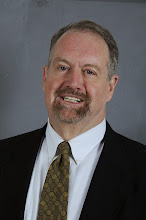
Carl Wilson is an Associate Lecturer in
Media and English at The Sheffield College, UK. Teaching and writing on a
variety of media topics, his work has recently appeared in four volumes
of the Directory of World Cinema series (American Hollywood and American Independent), and three volumes of the World Film Locations series (Vancouver, Toronto, & Havana). Carl looks at UK Heritage film tourism in the recently released Fan Phenomena: Jane Austen, has an essay on “Hollywood North, Canada” forthcoming in Mapping Cinematic Norths, and he is currently developing the multi-media digitisation archive project at Kelham Island Museum, Sheffield.
Carl
D. Wilson is a freelance writer based in Sheffield, UK. Examining a
variety of subjects, his work has recently appeared in four volumes of
the Directory of World Cinema series, three volumes of the World Film Locations series, and Fan Phenomena: Jane Austen. Carl has essays on Armenian Cinema, the Hollywood North, and Joss Whedon, in forthcoming edited collections.